
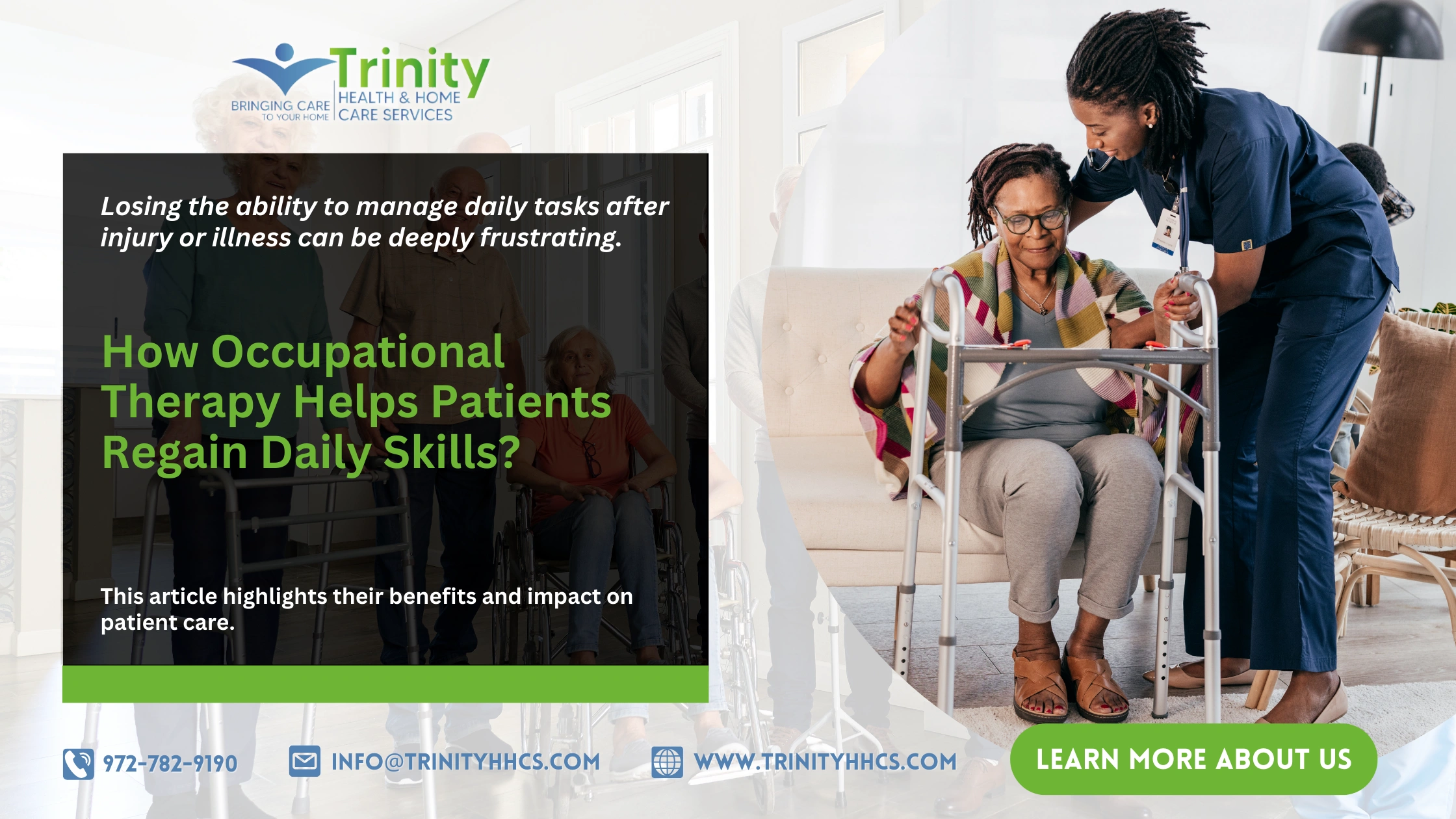
Losing the ability to manage daily tasks after injury or illness can be deeply frustrating. Simple routines like getting dressed or making breakfast suddenly feel out of reach. That’s where occupational therapy services come in, restoring the basic skills that support everyday independence.
With personalized treatment plans and real-world practice, occupational therapists help individuals return to a more functional, confident life. Whether at home or post-rehab, their role is vital in helping patients reconnect with routine.
Understanding the Core of Occupational Therapy
Occupational therapy helps people regain physical, cognitive, and emotional abilities needed to carry out daily activities.
While physical therapy focuses on strength and motion, occupational therapy addresses how those abilities are applied in daily living, like bathing, grooming, and preparing meals.
Therapy is most effective when delivered in the setting where those skills are used. In-home occupational therapy services offer this direct, real-life practice and faster progress through familiarity and repetition.
Why Everyday Tasks Deserve Equal Attention?
Regaining the ability to perform everyday routines is not just about physical strength. It’s about restoring independence, reducing reliance on others, and improving quality of life.
For example, someone who once needed help dressing each morning can regain that ability with focused therapy. This doesn’t just free up caregiver time. It restores personal dignity.
Even so, many patients overlook these goals in favor of larger ones, such as walking again. Occupational therapy bridges that gap by targeting both basic and complex skills for day-to-day living.
What Happens During an Occupational Therapy Session?
A home-based therapist begins with a functional evaluation, observing how the patient performs key activities in their living space. They then build a treatment plan with the following elements:
- Daily routine training: Reinforcing safe ways to dress, bathe, or manage household chores
- Strength and control exercises: Enhancing grip, reach, and motor coordination
- Cognitive strategies: Supporting memory, problem-solving, and task organization
- Environmental adaptations: Recommending household adjustments or tools for better access
- Ongoing education: Teaching patients and caregivers to maintain progress after sessions
This method combines physical, mental, and environmental strategies for long-lasting results.
Schedule a Home-Based Evaluation Today
If you or a loved one struggles with basic self-care at home, consider scheduling an in-home therapy assessment. Explore Trinity’s occupational therapy options to get started.
Who Gains the Most from Occupational Therapy?
Anyone facing physical or cognitive limitations in daily routines can benefit, including:
- Individuals recovering from stroke, surgery, or joint replacement
- People managing arthritis, Parkinson’s, or MS
- Children with developmental delays
- Seniors looking to age safely at home
- Veterans transitioning after hospitalization
For instance, a 68-year-old recovering from hip surgery regained the ability to prepare her own meals within six weeks of home-based therapy. Her story is one of many illustrating the value of restoring small but vital abilities.
Occupational therapy works especially well when paired with services like skilled nursing or senior care. These layered supports build a foundation for independence and safety.
In-Home Therapy vs. Facility-Based Rehab: What’s the Advantage?
In-home therapy provides immediate context. Patients practice using their actual bathroom, kitchen, or bedroom setup, not a mock version in a clinic.
This makes the experience more relevant and helps patients apply skills immediately.
For example, someone learning to climb stairs after surgery practices on the exact staircase they’ll use daily. That matters.
In addition, in-home therapists often work closely with home health aide services, resulting in more integrated and consistent care plans.
Small Wins Lead to Big Results
Progress in occupational therapy builds momentum. Being able to put on socks or cut food independently again may seem small, but these improvements create lasting change.
With every regained skill, confidence grows. That confidence opens the door to greater autonomy, such as managing medication, preparing meals, or even returning to hobbies and social activities.
Each step forward reduces long-term dependence on others, giving patients a renewed sense of control.
Choosing the Right Therapy Provider Makes a Difference
A skilled occupational therapist tailors treatment to your specific home environment, challenges, and goals. They also coordinate with other healthcare providers to ensure a smooth, continuous care journey.
Trinity Home Health Care Services offers licensed therapists trained in in-home therapy delivery. Their approach is practical, personalized, and focused on long-term success.
If additional support is needed, their home health care provider team can assist with daily tasks while therapy progresses.
To find their services near Carrollton, use Google Maps to view directions and reviews.