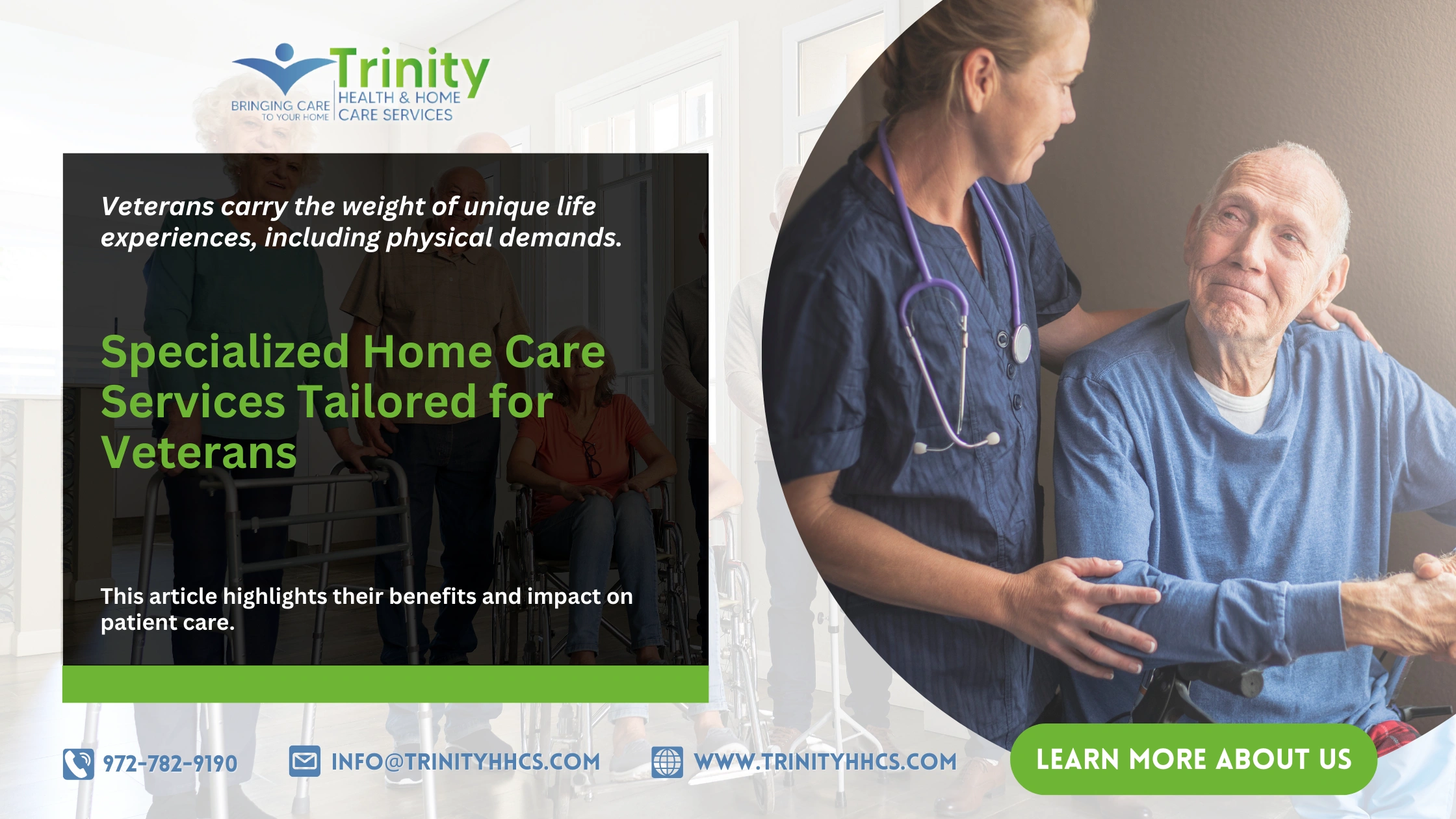
Veterans carry the weight of unique life experiences, including physical demands, long-term injuries, and service-related conditions. As they age or recover from illness, many need support that honors their military background and addresses their specific challenges. That’s where specialized home care services for veterans come in.
These services are designed to provide personalized medical, physical, and emotional support, all delivered at home. Whether recovering from surgery, managing long-term conditions, or needing daily assistance, veterans benefit from care that meets them where they are and respects where they’ve been.
Why Veteran-Specific Home Care Is So Important?
Veterans often experience health issues beyond typical aging. These may include chronic pain, mobility limitations, traumatic brain injury, or post-traumatic stress. Many also face complications from surgery or illness that require long-term monitoring or therapy.
In-home care creates a stable, respectful environment. It allows veterans to receive services while remaining connected to their routines, their homes, and their families. And for those in North Texas or similar regions, local providers offer care that’s familiar, culturally aware, and grounded in experience.
What to Expect from Veteran-Focused Home Care?
Specialized home care services for veterans typically include a blend of clinical, rehabilitative, and daily living support. Here’s a breakdown of what’s often included.
Skilled Nursing at Home
Licensed nurses assist with medication management, wound care, health monitoring, and post-operative recovery. Trinity’s skilled nursing services ensure that veterans receive professional care without the need for hospital stays. Learn more about skilled nursing options.
Help with Daily Living Activities
Home health aides provide hands-on support with dressing, bathing, meal prep, and light housekeeping. This level of care helps veterans maintain safety and a sense of routine. Explore home health aide services to see how this fits into daily life.
In-Home Therapy Programs
Rehabilitation is a key part of many veterans’ recovery. Whether rebuilding strength through physical therapy, restoring function through occupational therapy, or working on speech after a stroke, Trinity’s in-home therapy services provide essential support.
Speech and Cognitive Support
Speech therapy helps with swallowing, communication, and cognitive challenges. For veterans recovering from neurological events, in-home speech sessions improve comfort and participation.
Emotional Health and Social Connection
Mental health support is often part of a broader care plan. Veterans facing isolation, anxiety, or PTSD benefit from regular check-ins and structured routines that promote emotional well-being.
Benefits of In-Home Care for Veterans
Veterans and their families often prefer in-home care because of its flexibility, familiarity, and reduced stress. Here are the key advantages.
- Comfortable recovery in a familiar setting
- Reduced risk of hospital readmissions
- Personalized care routines
- Easier coordination with VA benefits and family involvement
- Consistency of providers and fewer disruptions
This type of care also supports caregivers by providing reliable outside support and professional oversight.
What Coverage Options Are Available?
Veterans may qualify for home care through VA benefits, Community Care programs, or other insurance support. Eligibility depends on service history, disability rating, income, and health status.
A provider experienced in veteran care can assist with:
- VA benefit verification
- Coordinating with physicians or VA case managers
- Setting up an individualized care plan
Working with a team familiar with VA systems saves time, reduces paperwork burdens, and helps families avoid delays.
What to Expect: Two Veteran Scenarios
Case 1: Post-Surgical Support
A 72-year-old veteran recovering from a knee replacement receives three visits a week from a nurse, in-home physical therapy twice a week, and help with meal prep from a home health aide. After eight weeks, they regain independence and avoid rehospitalization.
Case 2: Cognitive and Speech Therapy
Another veteran in his 60s is living with early-stage Parkinson’s. He receives in-home speech therapy, medication assistance, and weekly mental wellness check-ins. These services help him maintain daily function and reduce his risk of isolation.
These examples show how home care adapts to each veteran’s needs and evolves over time.
Getting Started: What to Do Next
If you’re exploring home care for yourself or a loved one who served, here’s how to begin.
- Reach out to a veteran-focused provider like Trinity’s veteran care team
- Schedule an in-home assessment to identify needs and goals
- Review VA benefit options with help from care coordinators
Veterans in or near Carrollton can access services through Trinity’s local team. Visit their Google Business Profile for directions and availability.