
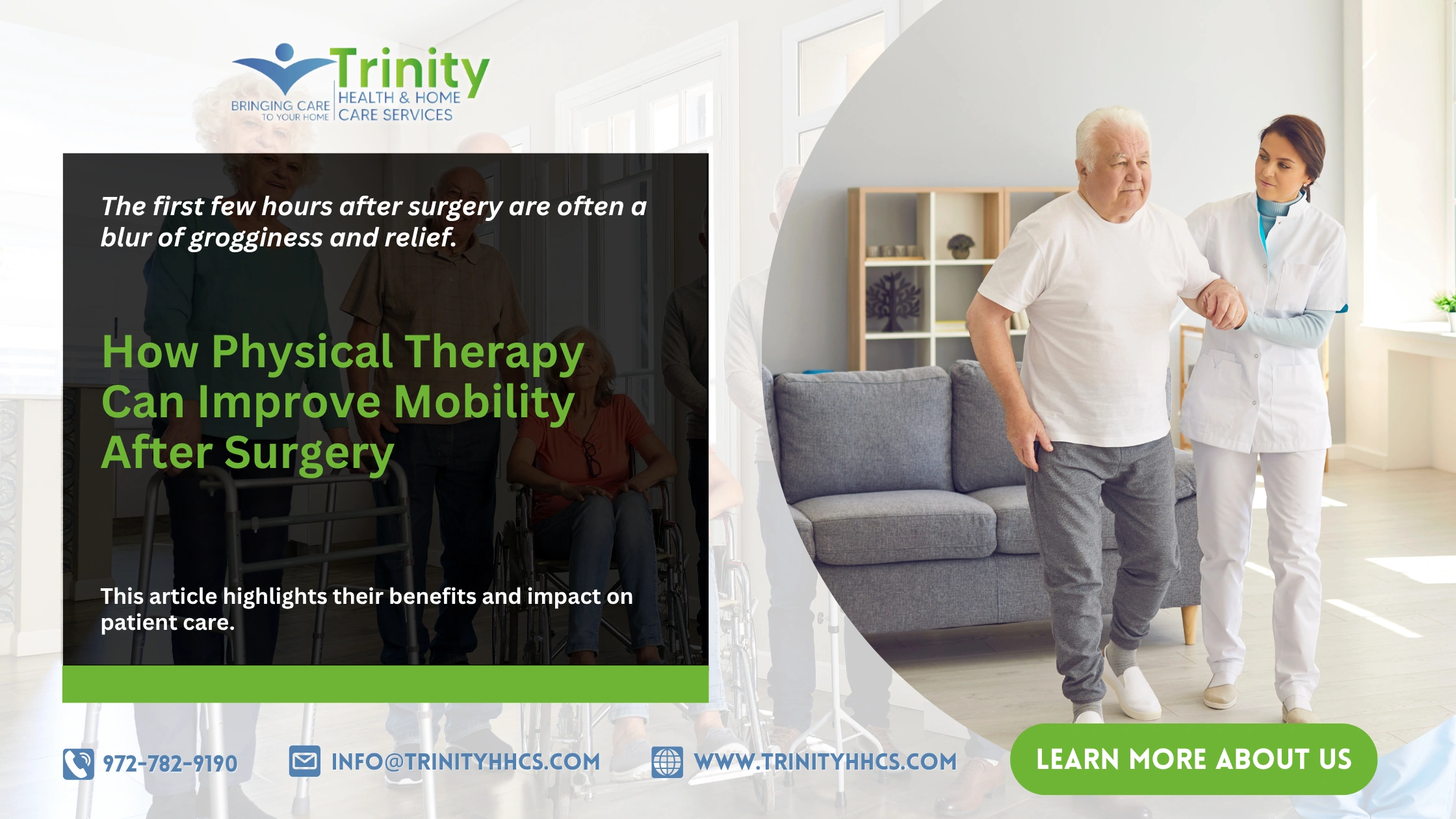
Regain Mobility After Surgery: A PT Guide for North Texas
The first few hours after surgery are often a blur of grogginess and relief. The procedure is over. But as the anesthesia wears off, a new reality sets in. The simple act of shifting your weight feels like a monumental effort. The thought of standing up, let alone walking down the hall, seems impossibly distant.
There’s a gap between the successful surgery and a successful recovery. It’s the space between lying in bed and confidently enjoying a beautiful afternoon at the Dallas Arboretum. For countless individuals and families recovering in Carrollton and across North Dallas, bridging this gap can feel overwhelming. However, this is precisely where the journey of recovery truly begins. It is an active, empowering partnership designed to help you reclaim your strength, your confidence, and your independence.
How Post-Surgical PT Helps You Recover
- Reduces Pain & Swelling: Gentle movement promotes circulation and healing.
- Restores Mobility: A phased approach safely increases your range of motion and strength.
- Prevents Complications: Early movement helps prevent blood clots and excessive stiffness.
- Rebuilds Confidence: Functional training helps you return to daily activities safely.
“Surgery is the event that repairs the body; physical therapy is the process that retrains it for life.”
Why is Movement So Crucial After Surgery? The Science of Healing
In the past, extended bed rest was a common prescription. Today, we know that early, controlled movement is one of the most critical factors for a successful outcome. Purposeful movement is a powerful healing agent. It significantly reduces the risk of post-operative complications like blood clots, promotes circulation to manage pain and swelling, and is essential for breaking down and remodeling scar tissue to prevent long-term stiffness, a principle supported by medical authorities like the American Academy of Orthopaedic Surgeons (AAOS).
What to Expect: The 3 Phases of Post-Surgical Rehab
Recovery is not a single event; it’s a gradual process. A structured physical therapy program is designed to meet you where you are and guide you safely through each stage.
Phase 1: The Protective Phase (Weeks 1-2)
This initial phase is all about protection and gentle activation. The focus is on pain and swelling control, protecting the surgical repair, and initiating very basic muscle contractions to prevent atrophy. This is also when the crucial work of a skilled nursing professional is often integrated, as they manage wound care and complex medication schedules.
Phase 2: The Mobility Phase (Weeks 2-6)
As the initial pain and swelling subside, the focus shifts to restoring your range of motion. A therapist will guide you through gentle stretching and passive movements. This is also when you will likely begin light strengthening exercises and start training with an assistive device, such as a walker or crutches.
Phase 3: The Strengthening Phase (6+ Weeks)
In this phase, you begin to build back real-world strength and endurance. The exercises become more dynamic, focusing on improving your balance, increasing your stamina, and simulating the functional tasks you need to perform in daily life.
Key Techniques Used in Post-Surgical Rehab
A therapist has many tools in their toolbox to help you achieve your goals. Common physical therapy techniques include:
- Manual Therapy: This involves hands-on techniques where the therapist gently manipulates your joints and soft tissues to reduce stiffness and improve mobility.
- Therapeutic Exercise: This is the core of rehab, progressing from simple muscle activation exercises to more complex strengthening and conditioning movements.
- Gait and Balance Training: This is a critical component for preventing falls. A therapist will analyze how you walk and provide exercises to improve your stability.
- Functional Task Simulation: This involves practicing real-world movements, like reaching into a high cabinet or getting up from a low sofa, in a safe and supervised manner.
The In-Home Advantage: Why Post-Surgical Rehab at Home is Effective
For many, traveling to an outpatient clinic after surgery is exhausting. This is why in-home physical therapy has become such an effective option. This type of specialized, home-based recovery is a cornerstone of effective post-acute care.
Recovering in the comfort of your own home reduces stress and minimizes infection risk. More importantly, it allows the therapist to tailor your rehabilitation to your actual living environment. You practice on your own stairs and navigate your own hallways. This real-world application makes physical therapy at home services incredibly practical and is part of a full suite of therapeutic support.
Surgery is just the first step. The recovery that follows is your journey back to the life you want to live. It is an active process that requires patience, dedication, and expert guidance. Your journey back to full mobility is a partnership, and it starts with the right physical therapy.
Questions North Texas Families Ask About Post-Surgical Rehab
1. How soon after surgery should I start physical therapy? This depends on your surgeon’s protocol, but for many procedures, physical therapy begins within 24-48 hours. Early, gentle movement is key to preventing stiffness and complications.
2. Will physical therapy be painful after my surgery? The goal of post-surgical PT is to work with you to manage pain, not cause more of it. A good therapist will communicate with you constantly to ensure the exercises are challenging but tolerable. Some discomfort is normal, but sharp pain is not.
3. What is the benefit of in-home physical therapy vs. going to a clinic? In-home physical therapy eliminates the stress and difficulty of traveling after surgery. It also allows your therapist to tailor your recovery to your actual living environment, helping you practice tasks like navigating your own hallway or getting in and out of your own bed.
4. What other therapies might I need after surgery? Depending on your needs, your doctor may also recommend occupational therapy to help with daily living activities or, in some cases, speech therapy if the surgery impacted swallowing or cognitive functions.
If you are planning for surgery or are in the midst of recovery, contact our North Texas team to discuss a personalized therapy plan.